Yoshiwara
Yoshiwara, vom Freudenhaus des Lebens (“Yoshiwara, of the Pleasure-House of Life”, 1920) is her late novel, named for Tokyo’s Yoshiwara pleasure district. In three parts — Indra, Shiragiku, and Benares — it follows its heroine Indra Versen out of Berlin and across India, Ceylon, Burma, and Japan, drawing on Preuschen’s own Asian travels. A foreword by Professor Sh. Chiba of Tokyo frames the book.
It is the one work of hers freely available online in full, transcribed from Projekt Gutenberg-DE — and the first we are translating into English. See the translation of its opening.
Written in the Sahara, printed in 1914, published in 1920
Her memoir says where the book was written, and it is not where anyone would guess. In the winter of 1913–14 she spent five weeks at the Hotel Orient in Biskra, a five-franc artists’ house in a Saharan oasis, and wrote it there in one sitting: “Im behaglichen Zimmer des Hotels Orient, mit dem Ausblick auf einen üppigen Palmengarten, schrieb ich meinen japanischen Roman »Yoshiwara«. Ich schrieb ihn in einem Zug.” She had crossed Japan six years earlier, in 1909.
The date on the title page is six years later than that, and the memoir explains the gap too. Otto Janke accepted the book at once and had it set and printed in 1914 — and then Japan declared war on Germany on 23 August 1914. A German novel named for the pleasure quarter of Tokyo, carrying a foreword by a professor from Tokyo, became unpublishable within weeks. It waited out the war, and appeared in 1920, two years after she died.
Both facts come from chapters 66 and 73 of Der Roman meines Lebens.
The 1920 edition
The Otto Janke edition is a designed book, and the designs are hers: hand-drawn lettering and Japanese-inflected ornament marking the title page, the contents, and each of the three parts. They are worth seeing, because they show her working in a register the paintings never reach — flat, linear, graphic, closer to Jugendstil bookplates than to her crowded oils.
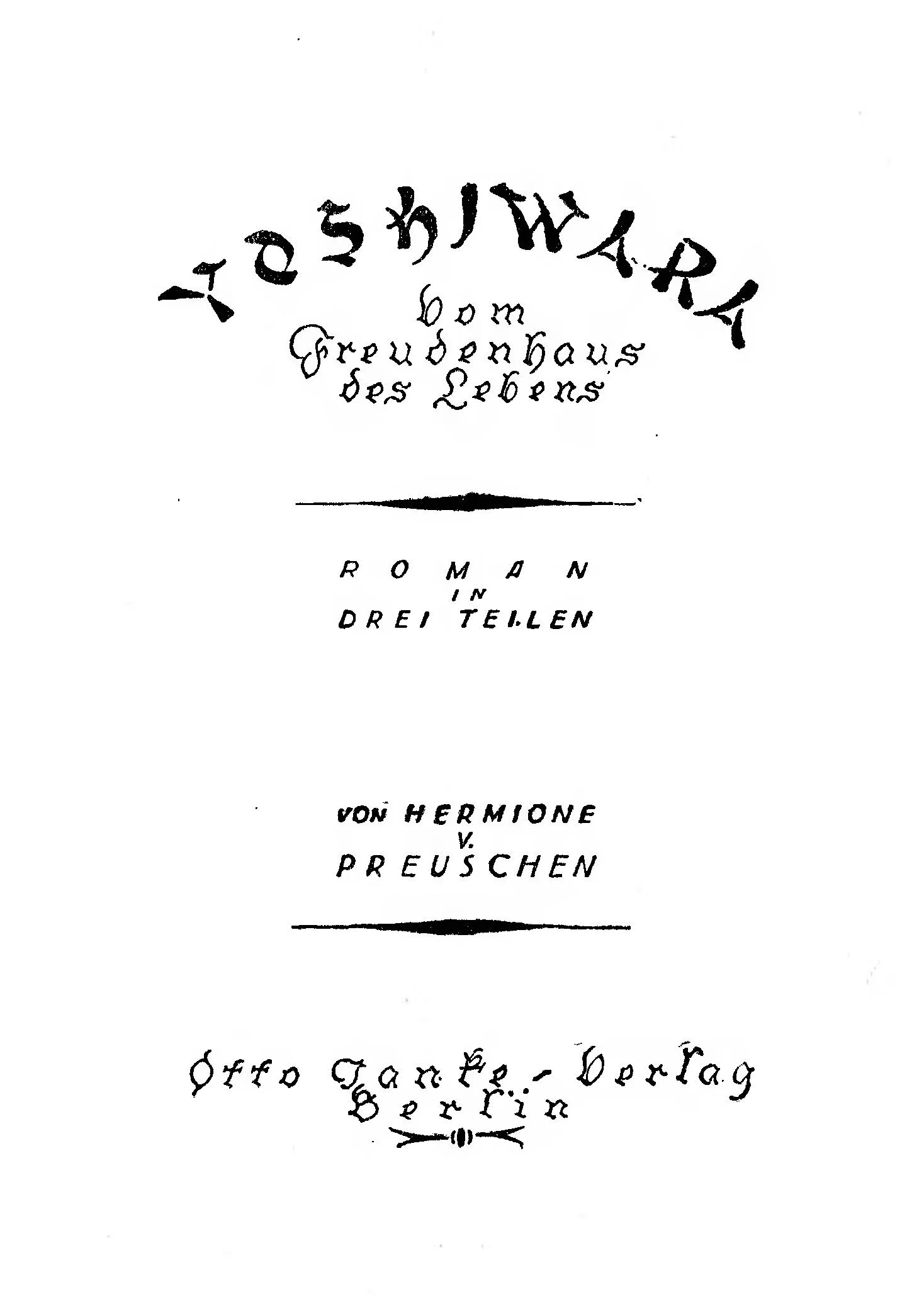
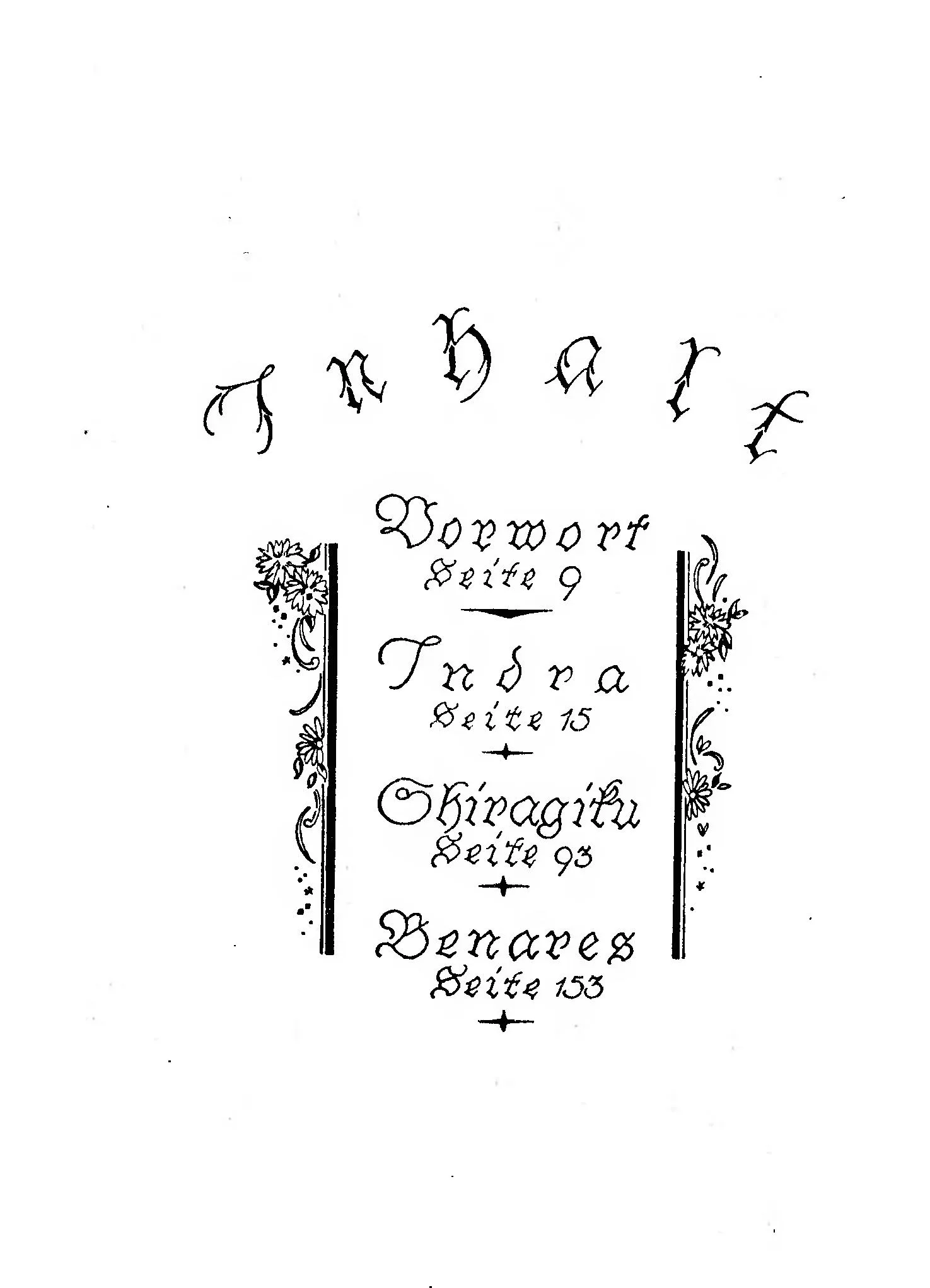
The three part-titles each take their emblem from the place:
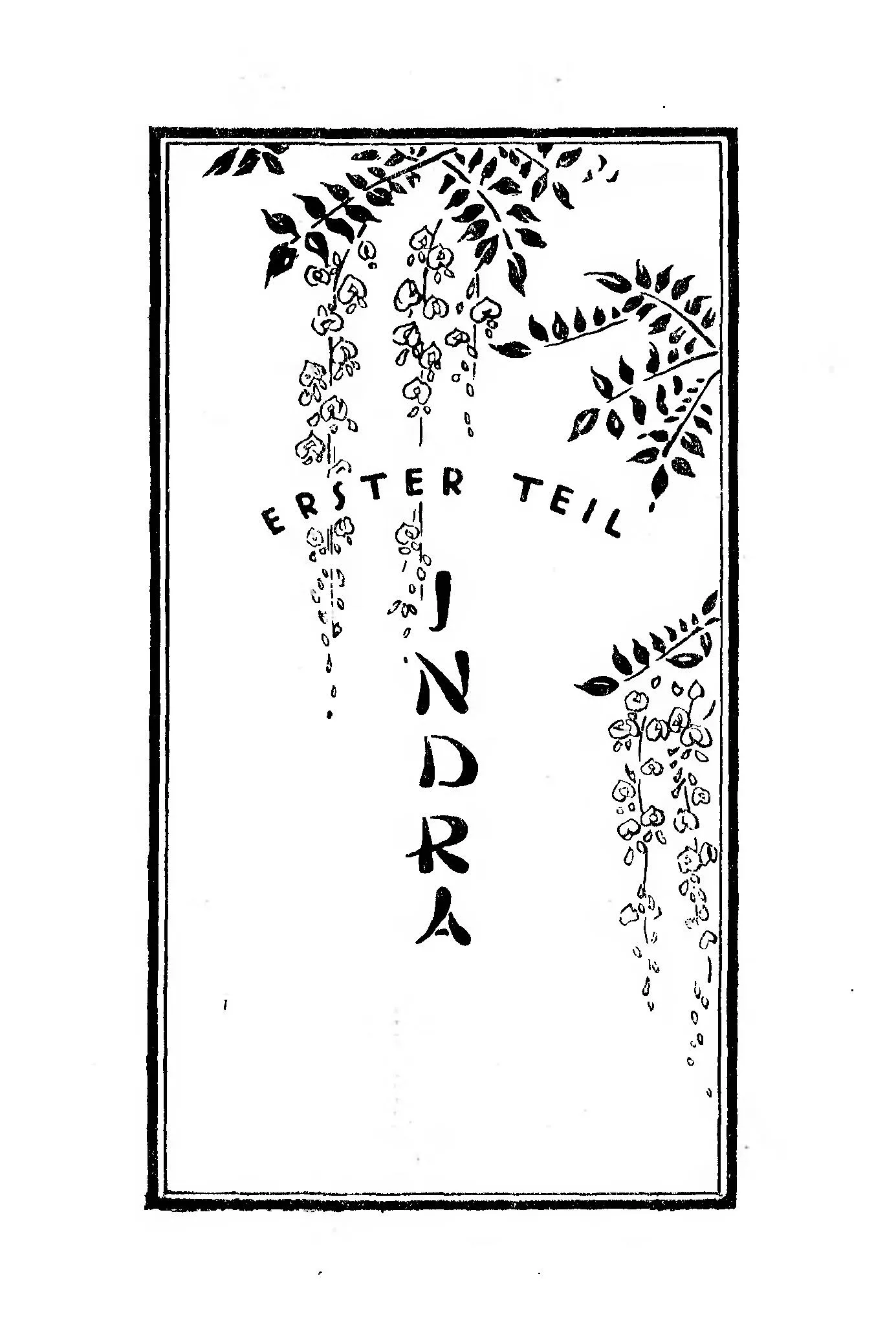
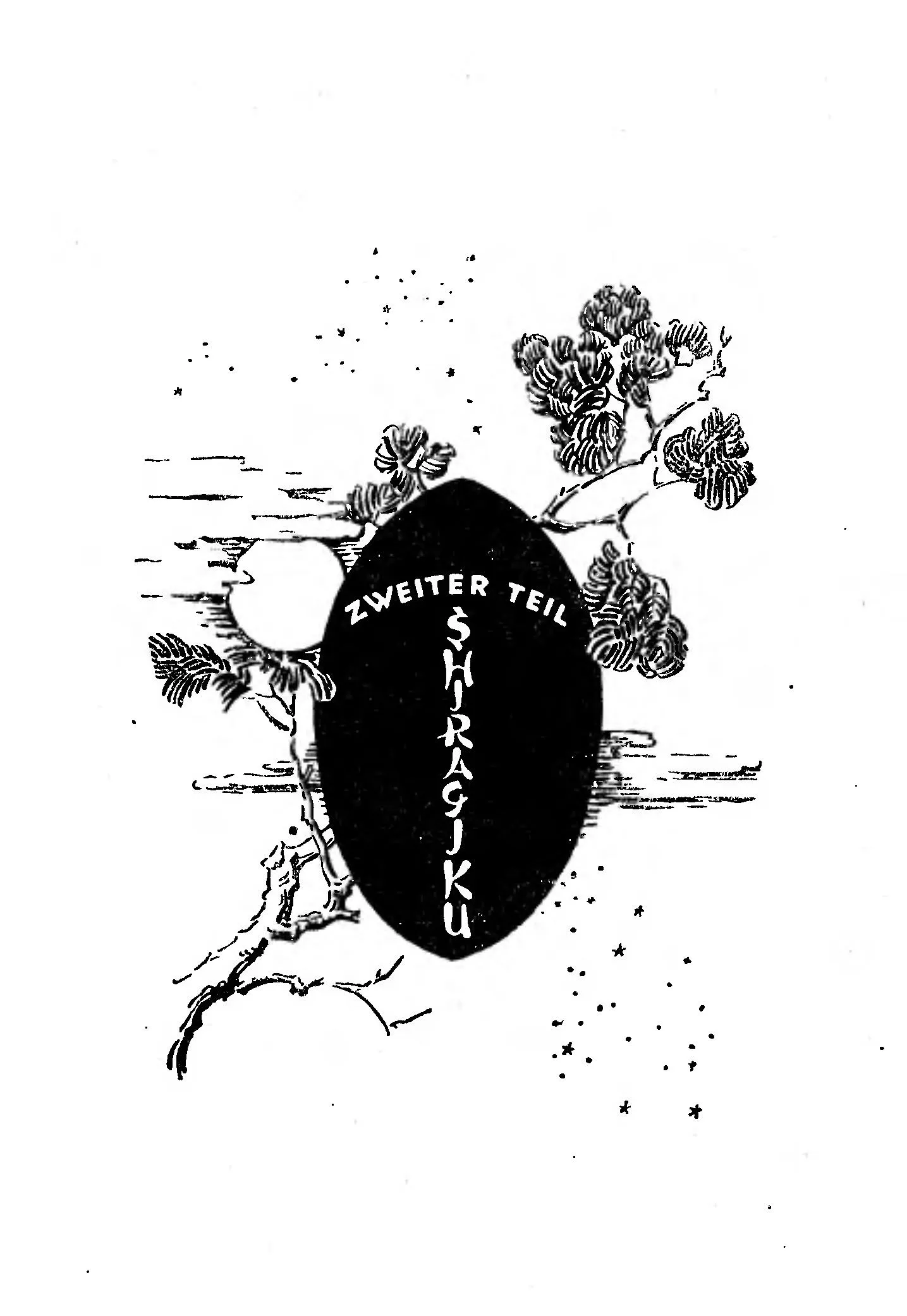
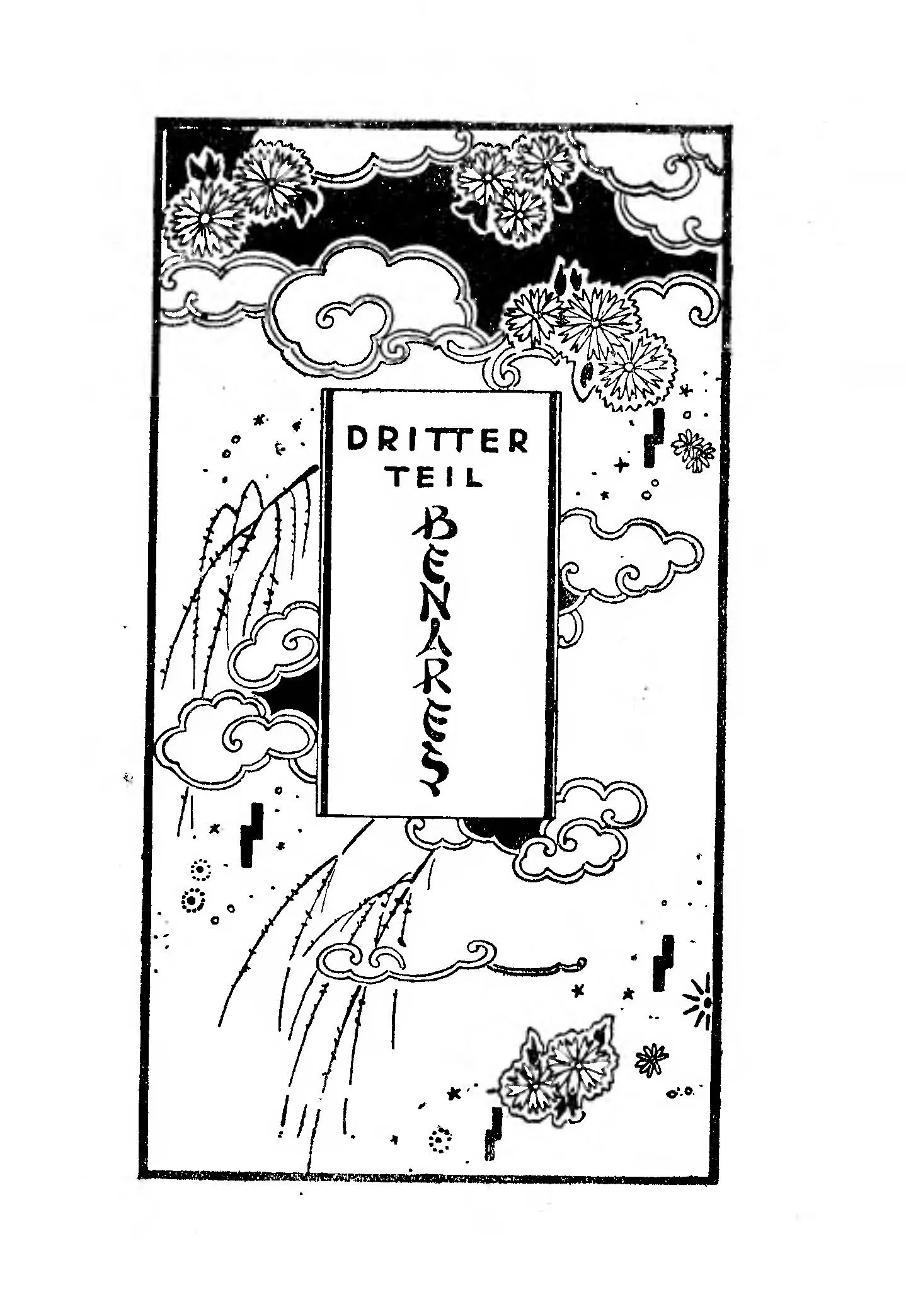
Shiragiku — 白菊, “white chrysanthemum” — gets the moon and the flower it is named for; Benares gets the monsoon. Page scans: Wikimedia Commons, public domain. A full scan of the 1920 printing is available as a DjVu file.